certified by:

What matters to us
Trauma-informed practice means drawing strength from the power of survival. It is about learning to cope with suffering, relationship problems, fear, hatred, contempt and pain. It is about understanding how these things arise and finding out what helps. Diagnoses play a secondary role in our work.
Focusing on possibilities
We build on what is possible, what can be achieved in the given context, and what is already in place. What a person has learnt, what they are capable of, and how they cope with difficulties – all of this forms the basis for coping with stress, upon which we wish to build.
Mindfulness
Being aware of what is. Focusing on the here and now. Remaining grounded in the present moment. Only when I am aware of myself can I also be aware of others. Self-care is an essential aspect of mindfulness.
Interculturality
Culture is the measure of all things; we view the world through the lens of the perspective we have adopted. We can exchange ideas and connect with one another. This broadens our horizons.
Acting in a focused and effective manner
We provide you with the necessary theoretical knowledge so that you can decide what you would like to do differently – and how to go about it. The most important thing for us is that you feel confident when taking action.
Wherever our attention is focused,
that is the only place where we can see anything. It is therefore crucial where I direct my gaze and where I focus my energy. We pay attention to connections, relationships and bonds – with others and with ourselves.
Trauma Competence
We work with our own trauma-model, which is accessible to everyone – it brings together the key principles of trauma theory and 25 years’ experience in professional development. Brain research, attachment theory, developmental psychology and dissociation theory form the theoretical basis.
Our publications
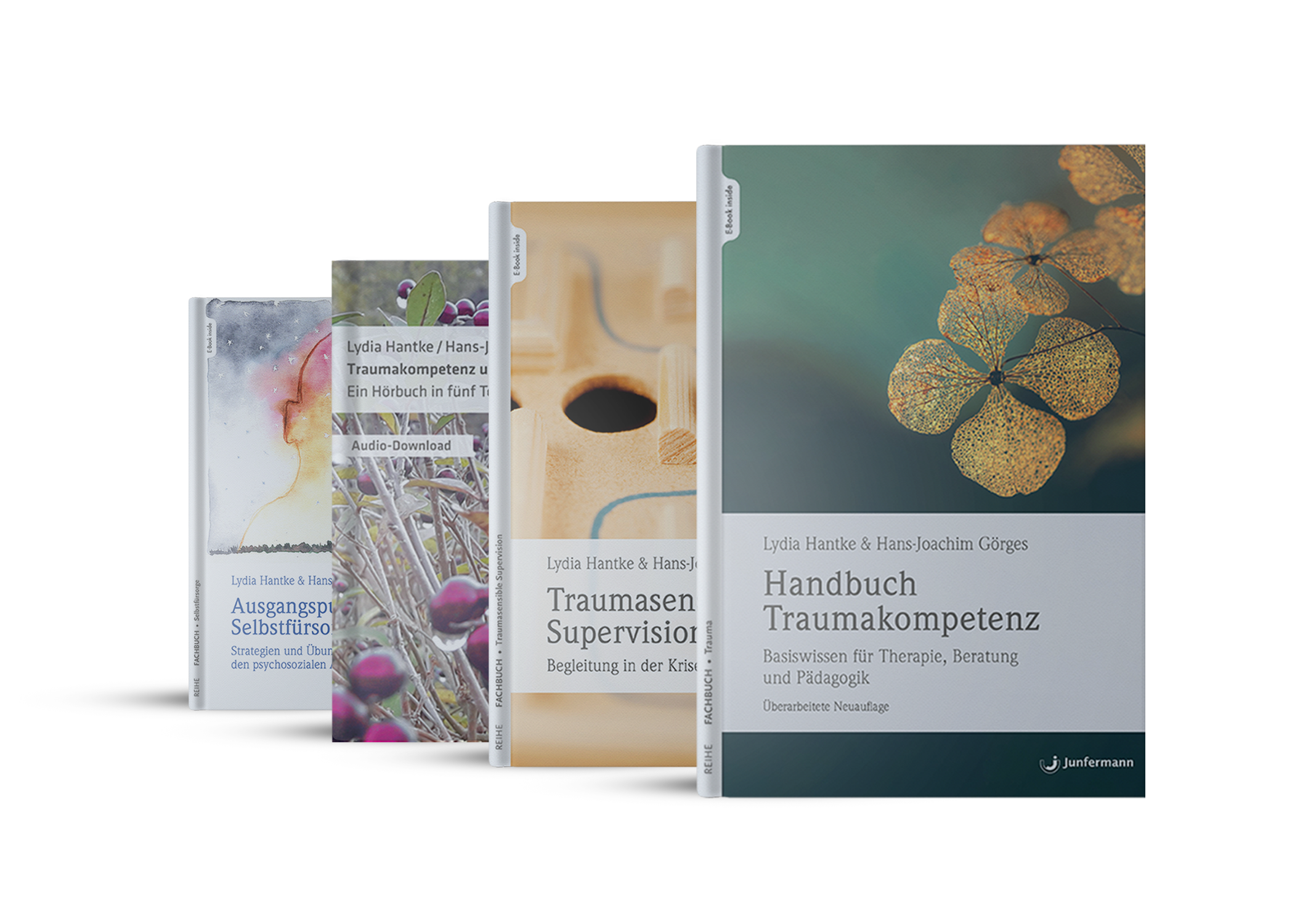
Our publications, as well as those by our lecturers, on the subject of trauma, selfcare and supervision … Many of them are available to download.
Hantke, L./Görges, H.-J. (2027, in print): Handbook on Trauma Competence: Foundations for Therapy, Counselling and Education. bod
(english version of Hantke/Görges 2023: Handbuch Traumakompetenz. Basics für Therapie, Beratung und Pädagogik, Junfermann)
News from institut berlin.
The (German) video was filmed during a Pecha Kucha evening in Berlin. Pecha Kucha is a presentation format developed in Japan, in which exactly 20 slides are shown for 20 seconds each – not a moment less, not a moment more. We think this is an exciting way to keep things brief and get straight to the point. Many thanks to the organisers!
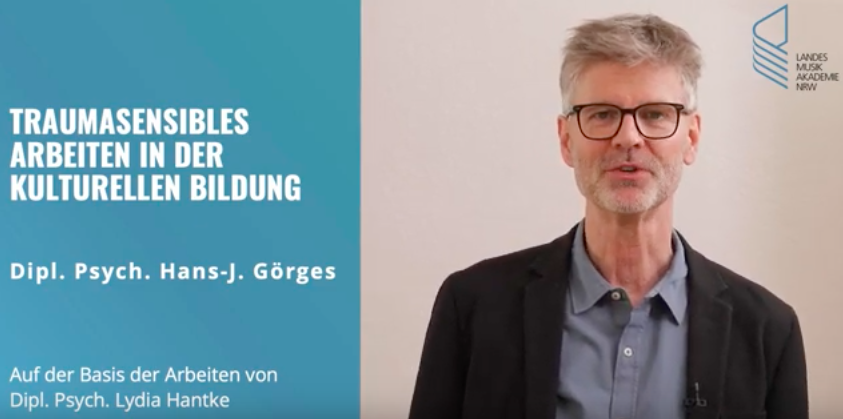
Under the heading ‘Trauma-informed practice in cultural education’, the Landesmusikakademie NRW has posted a free educational video (with English and Ukrainian subtitles) online. In the video, Hans-Joachim Görges explains how unprocessed experiences affect a person’s current well-being and behaviour.
10 per cent of the profits from the training courses run by institut berlin go to: